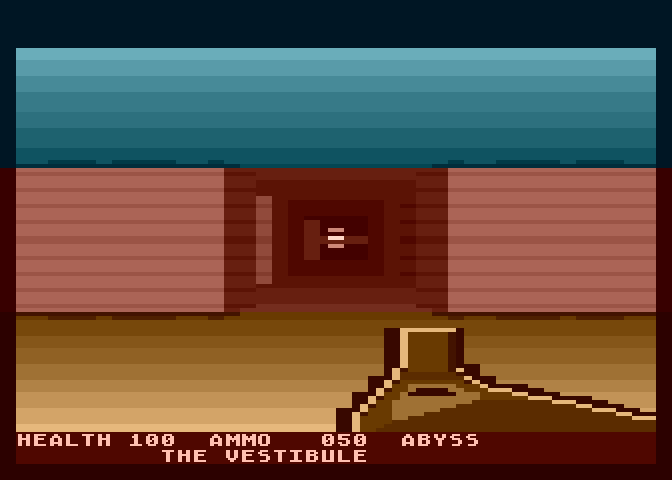
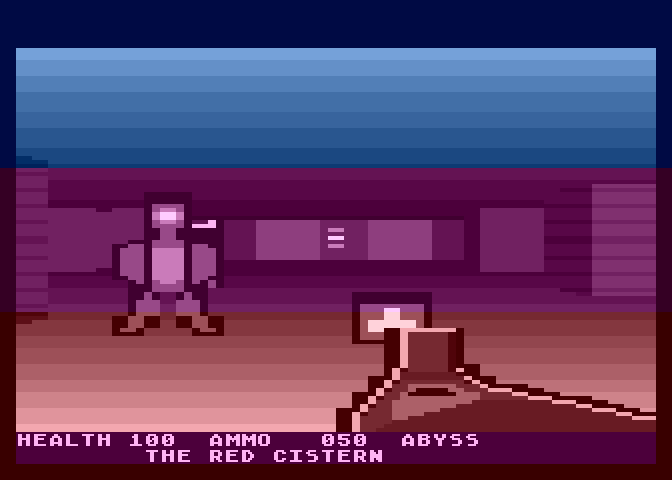
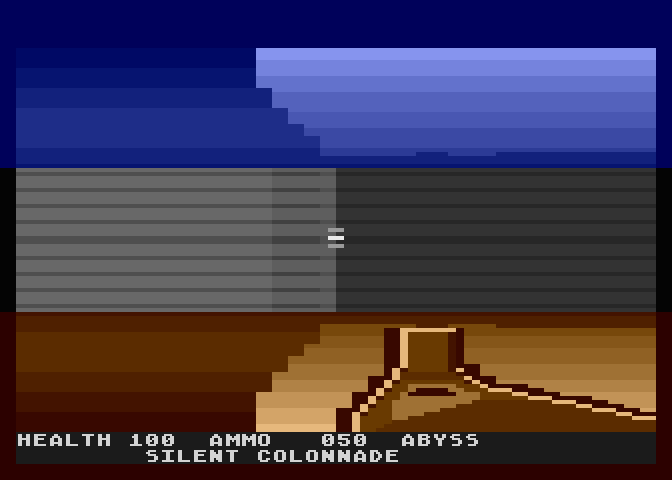
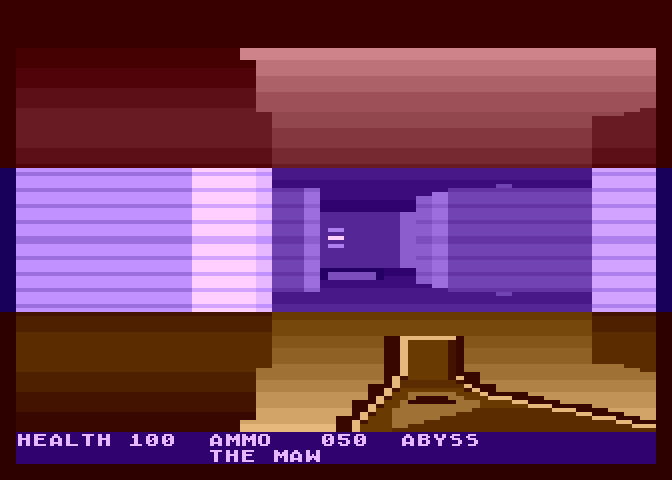
Built overnight, 31 July 2026, by Claude and Tony Gillett — an experiment in how
close an 8-bit machine can get to the feel of DOOM, with an emulator harness measuring
every step. Then it met real hardware.
ATTEMPT 1 — IT LOADS, AND THE PICTURE IS GARBAGE
Three modules lived at $A000–$BFFF: the BASIC ROM's address space on a real XL. The emulator
boots with BASIC off; the hardware boots with it on. 130 green test runs never stood a chance
of seeing it. Fixed with an eight-byte stub that banks the ROM out before anything loads.
ATTEMPT 2 — THE TITLE IS PERFECT, AND THE PICTURE ROLLS
The display list asked ANTIC for 248 scanlines against a hard limit of 240 — playfield DMA
running where the vertical sync should be. The emulator renders a fixed window and simply
clipped it; a CRT rolls. Two of the four status rows were blank anyway. Now 232.
ATTEMPT 3 — IT BOOTS, LOCKS, AND PLAYS
1 August 2026: the fixed build boots, locks and plays on the real 800XL, off an SD card,
on a CRT. Both fixes are now assertions in the test sweep, and the question they left behind
is the project's best souvenir: not does it pass? but
what can this harness not see, even in principle?
AND EVERYTHING BUILT SINCE
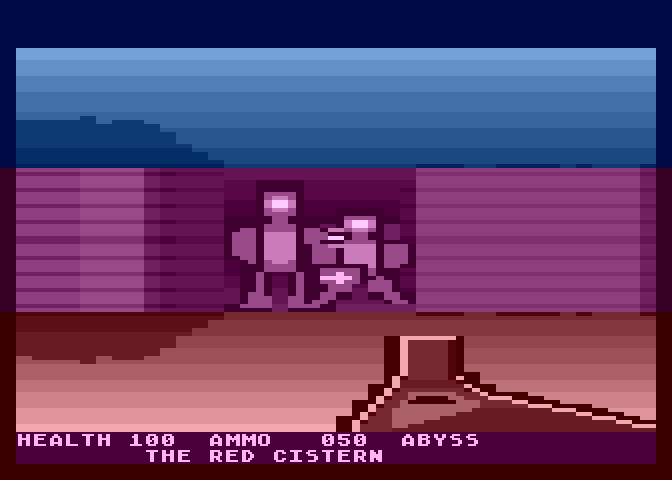
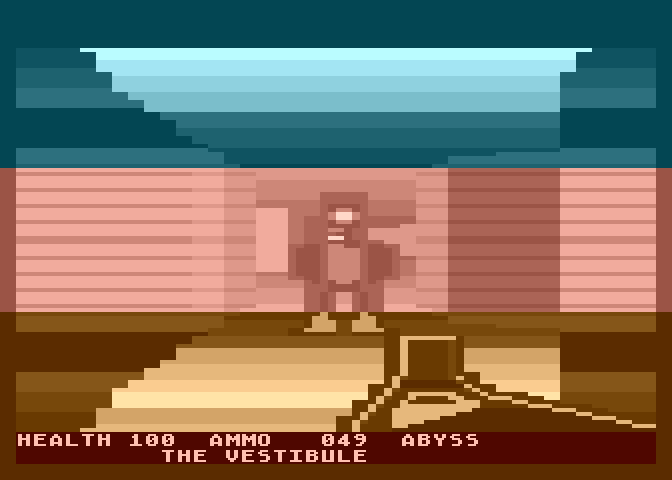
The bestiary, the knockback, the lava, the redrawn fireballs and masonry that finally
recedes with distance — all confirmed on the same CRT, including a renderer change and a
memory reshuffle, the riskiest edits of the lot.
INCLUDING THE RISKY PARTS
The mortar courses now follow the perspective of the wall rather than running
parallel to the horizontal, so they converge toward the vanishing point down a corridor. And
the hue seam follows the walls: mode 9 allows only one hue per scanline, but the
seams no longer sit at fixed rows, so 99.5% of a near wall carries the wall's own colour
instead of 56%. Both were measured before they were believed, and both are now confirmed on the CRT.
Nothing on this page is emulator-only.